English

Author: Site Editor Publish Time: 2026-07-24 Origin: Site


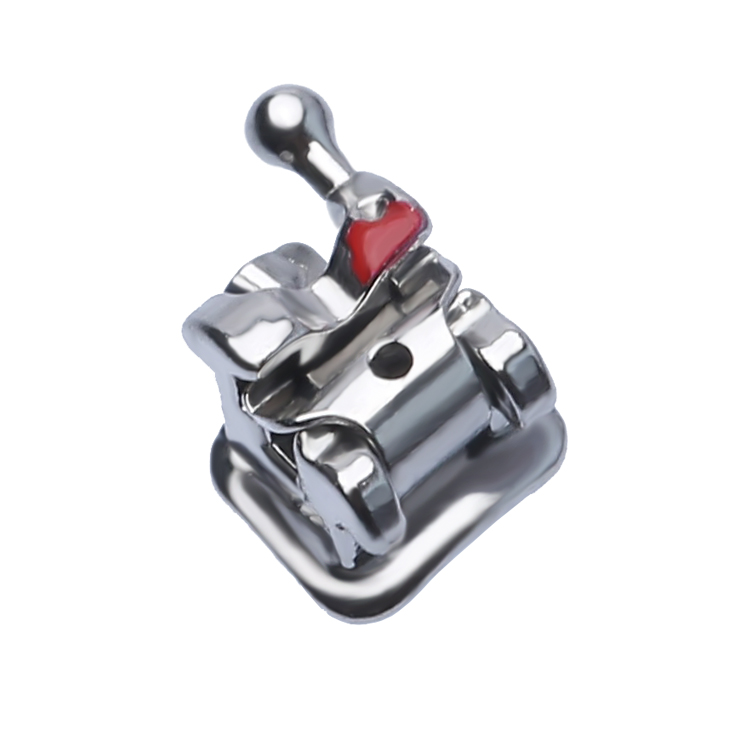
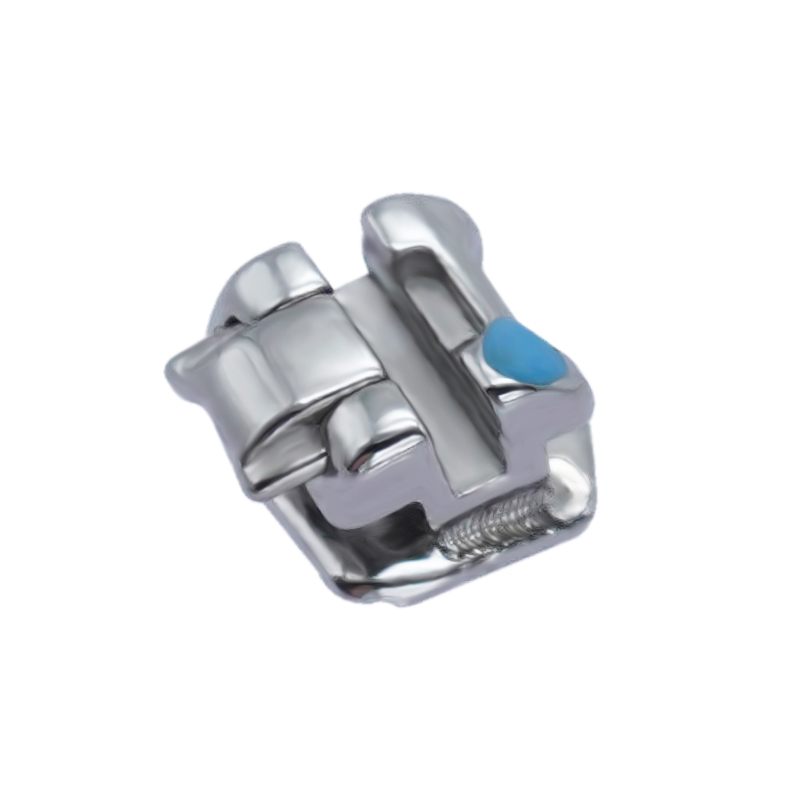
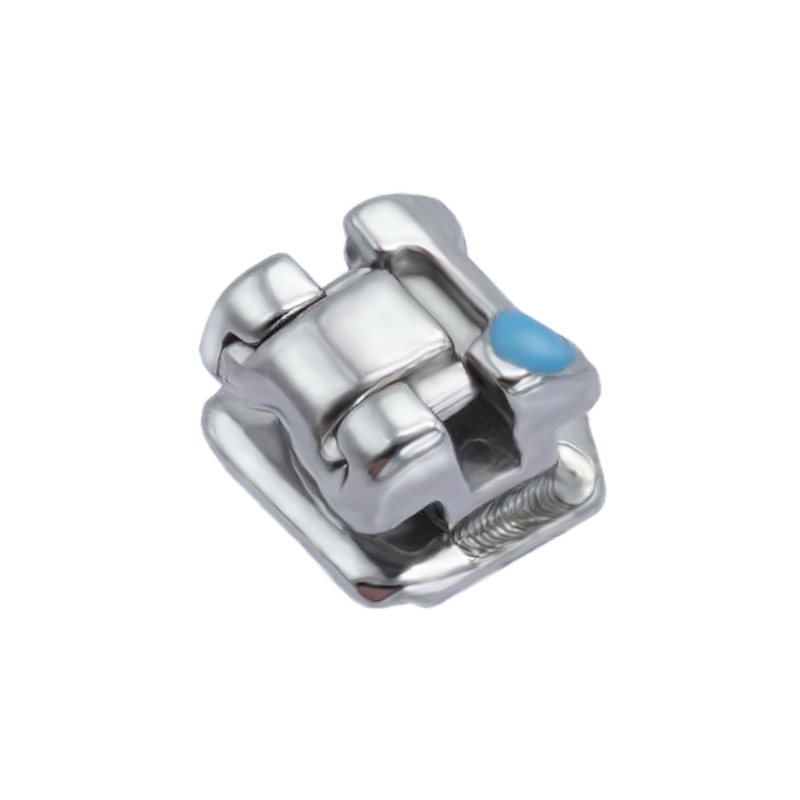
Self-ligating brackets use an integrated closure mechanism to retain the orthodontic archwire within the bracket slot, generally eliminating the need for conventional elastomeric modules or ligature wires during routine ligation. Based on how the closure mechanism interacts with the archwire, self-ligating orthodontic brackets are commonly classified as either active or passive.
This guide focuses on the biomechanical differences between active and passive self-ligating brackets rather than differences in bracket materials. Understanding these mechanisms can help orthodontic professionals select an appropriate self-ligating system according to the planned archwire sequence, treatment stage and biomechanical objectives.
Active Self-ligating Brackets | Passive Self-ligating Brackets | |
Flexible spring clip | Typical closure mechanism | Rigid slide, door or passive closure |
The clip can apply pressure after activation | Primary mechanism | The closure encloses the archwire with in the slot |
The clip may remain inactive or become locally activated at displaced teeth | Small round archwires | Usually provides greater archwire clearance within the closed slot |
Archwire-clip interaction may progressively increase | As archwire size increases | Control increases mainly as the archwire fills more of the slot |
An activated clip may promote more positive archwire engagement | Rotated or displaced teeth | Engagement depends more heavily on archwire dimensions, stiffness and slot fill |
Increased clip contact may contribute to resistance to sliding | Sliding mechanics | May support lower-resistance sliding under appropriate conditions |
The clip may participate in archwire engagement | Rectangular archwires | control relies mainly on contact between the archwire and slot walls |
Dynamic interaction that changes with archwire engagement | Core biomechanical characteristic | Relatively consistent slot closure |
Whether an active spring clip contacts and acts on the archwire depends on archwire dimensions, tooth displacement and the actual degree of engagement. A passive slide primarily closes the slot, while archwire control depends more strongly on wire dimensions and how completely the archwire fills the slot.
The biomechanical differences between active and passive self-ligating brackets therefore change throughout treatment as the archwire sequence progresses. The detailed activation behaviour of active clips and the sliding mechanics of passive systems can be explored separately in subsequent articles.
Archwire sequences and treatment protocols vary according to the individual case and the orthodontist’s treatment plan. The following sections describe how active and passive self-ligating mechanisms may behave during three common stages of fixed orthodontic treatment.
Initial alignment and leveling typically involve small, flexible nickel-titanium archwires.
With an active self-ligating bracket, a small archwire may not initially contact the spring clip. At that point, the clip primarily retains the wire within the slot. At teeth with pronounced rotation, inclination or vertical displacement, however, the archwire may locally deflect the clip and produce earlier active interaction.
As a result, even when the same archwire is used throughout the dental arch, individual brackets may exhibit different levels of clip activation.
A passive slide does not actively press a small archwire toward the slot base. It therefore generally preserves more clearance for the wire within the enclosed slot, allowing it to work with light, flexible initial archwires.
During the working stage, archwire dimensions usually increase. Treatment may involve arch coordination, rotational control, anchorage management, extraction space closure and sliding mechanics.
As archwire dimensions increase, contact between the wire and the spring clip of an active self-ligating bracket may become more pronounced. Once activated, the clip can promote archwire engagement, although the resulting contact pressure may also contribute to resistance during sliding.

A passive closure mechanism keeps the slot closed without continuously exerting active pressure on the archwire. When the teeth are relatively well aligned and bracket–archwire angulation remains limited, this design may support lower-resistance sliding mechanics.
Passive self-ligation, however, does not mean that the bracket–archwire system is free from resistance. Actual sliding behaviour is also influenced by archwire dimensions, cross-section and material; bracket–archwire angulation; binding at the slot edges; bracket positioning; surface characteristics; the oral environment; and the overall biomechanical design.
As bracket–archwire angulation increases, binding and related mechanical effects may become more influential than the closure mechanism itself. Likewise, using an active bracket with an elastic spring clip does not directly translate into faster clinical space closure.
Larger rectangular archwires are commonly used during finishing and detailing to support torque expression, correction of residual rotations and final occlusal adjustments.
In an active self-ligating system, a rectangular archwire may produce greater spring-clip deflection. Once sufficiently activated, the clip may help maintain more positive engagement between the archwire and the bracket slot.
In a passive self-ligating system, control depends more heavily on how completely the rectangular archwire fills the slot and how it contacts the slot walls. As archwire dimensions approach the slot dimensions, archwire–slot clearance generally decreases.
Although an active clip may participate in rectangular archwire engagement, actual torque expression and finishing control also depend on the true dimensions of the bracket slot and archwire, archwire–slot play, bracket prescription and positioning, manufacturing tolerances, archwire sequence and finishing adjustments. Active self-ligation therefore does not necessarily provide stronger torque control in every clinical situation.

Neither self-ligating mechanism is universally superior for every orthodontic case. Selection should reflect how the orthodontist wants the archwire to interact with the bracket and which archwires and mechanics are planned for each stage of treatment.
· Dynamic archwire–bracket interaction is desired as engagement increases;
· The treatment plan benefits from more positive archwire engagement after clip activation;
· Engagement of the archwire in rotated or displaced teeth is an important consideration;
· The spring clip is expected to participate in archwire control with larger wire dimensions.
· Greater clearance for small archwires is preferred during initial alignment;
· The archwire sequence emphasizes light forces and highly flexible wires;
· Lower-resistance sliding is an important biomechanical consideration during the working stage;
· A relatively consistent passive slot-closure mechanism is preferred.
The final choice should also account for slot size, bracket prescription, archwire sequence, malocclusion characteristics, anchorage requirements and the orthodontist’s clinical experience. The self-ligating mechanism should be viewed as one component of a complete orthodontic system rather than an independent determinant of treatment outcome.
Active and passive self-ligating brackets differ in design and laboratory-measured biomechanical behaviour, but these differences do not always translate directly into clinically meaningful advantages.

Badawi et al., 2008
A systematic review and meta-analysis of randomized controlled trials suggested that active self-ligating brackets may offer a modest advantage in alignment efficiency. Neither design demonstrated a clear advantage in treatment-related changes in intercanine, interpremolar or intermolar width. The authors also emphasized the need for further high-quality research to confirm these findings.
*Review the systematic review on active and passive self-ligating brackets.
A randomized controlled trial comparing active self-ligating, passive self-ligating and conventional brackets found no significant difference between the active and passive systems in initial alignment. Conventional brackets achieved initial alignment sooner than either self-ligating system in that study, while no statistically significant differences in space-closure time were found among the three groups.
*Review the randomized controlled trial on alignment and space closure.

Brauchli et al., 2012
Overall, current evidence does not establish that one self-ligating mechanism consistently reduces treatment time or produces better outcomes across all orthodontic cases. Biomechanical characteristics observed under specific experimental conditions should not be interpreted as guaranteed clinical advantages.
What is the main difference between active and passive self-ligating brackets?
Active self-ligating brackets typically use a flexible spring clip. Once the archwire contacts and deflects the clip, the clip can apply pressure to the wire and increase archwire–bracket interaction.
Passive self-ligating brackets generally use a rigid slide, door or other passive closure mechanism. Its primary function is to enclose the slot and retain the archwire without actively pressing it toward the slot base.
Are active self-ligating brackets always active?
Do passive self-ligating brackets always have lower resistance to sliding?
Do active self-ligating brackets provide faster orthodontic treatment?